


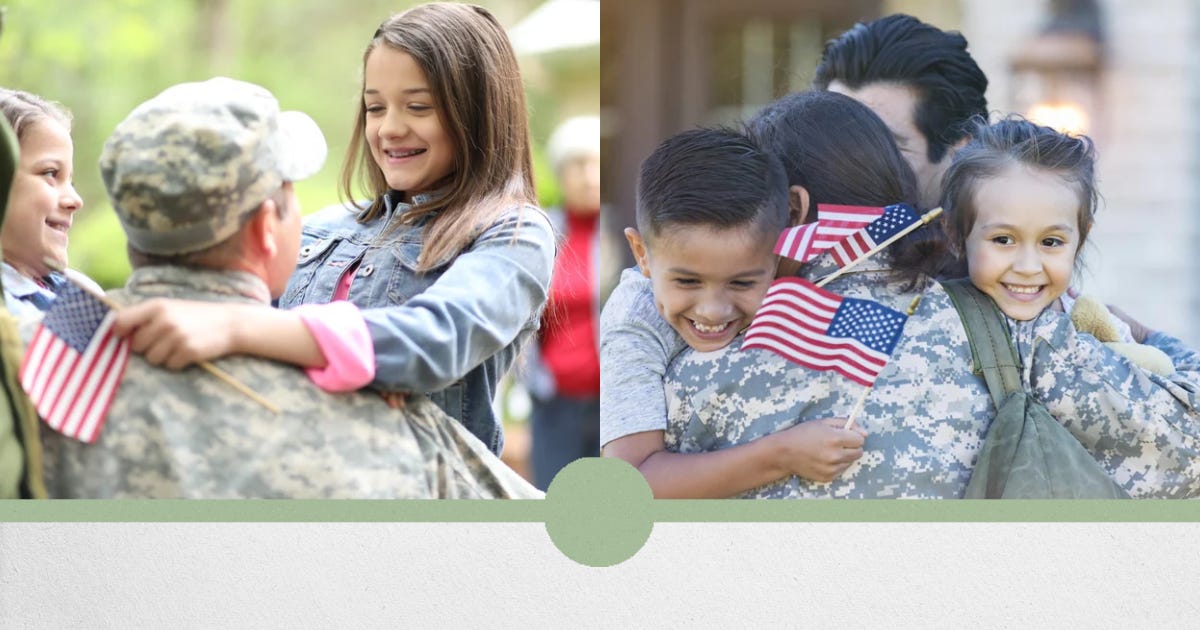
Every Veterans Day, I find myself thinking not only about the men and women who have served our country, but also about the families who have helped make that service possible, and the values that are passed down from one generation to the next.
Military service is deeply woven into my own family history. I am the daughter of a veteran, the granddaughter of two veterans, the great-niece of veterans, and the sister-in-law of a service member. Across generations, service to our country has been part of our family’s story and our understanding of what it means to contribute to something larger than ourselves.
Growing up, that history was present in both the stories I heard and the experiences we shared. My paternal grandfather fought in the Battle of Anzio during World War II. As a Jewish American service member, he was shielded by fellow soldiers from witnessing the atrocities uncovered during the liberation of Nazi concentration camps in Europe. He passed away before I was born, so I never had the opportunity to hear about his experiences firsthand. Instead, I turned to his brother, my great-uncle, who had also served during World War II, primarily stationed in Paris. During middle and high school, I interviewed him for several school projects, learning about his wartime experiences and gaining a more personal understanding of a defining chapter in our nation’s history.
Other memories were formed through experiences I shared with family members who were still serving. I remember attending my maternal grandfather’s military retirement celebration and visiting McGuire Air Force Base in New Jersey, where my mother served on active duty as an Air Force doctor.
Some of the most meaningful reminders have come later in life. When my beloved maternal grandfather passed away about a decade ago, I watched with deep emotion as two active-duty service members presented my mother with the American flag that had been draped over his casket. That perfectly folded flag, now framed in her home, still catches my eye every time I visit with my daughters. For me, it represents not only the country’s gratitude for his military service, but also a lifetime of commitment to public service, including his work in civilian roles for the military following his active-duty service.
These experiences shaped my understanding of citizenship. Service was both something I saw modeled by people I loved and an explicit value in our family. We grew up with the expectation that we would find ways to serve our country and our communities, even if we chose different paths. Public service was not simply something to admire in others. It was part of what our family believed in, what we expected of ourselves, and how we understood our responsibilities as citizens.
My own path ultimately led me toward a different form of public service, as an advocate for civic education, civil constitutional dialogue, and a more vibrant civic life. But I see that work as deeply connected to the values I inherited from my family: a belief in our shared responsibility for the country’s future, a commitment to strengthening the institutions of self-government, and an understanding that citizenship asks something of each of us.
Now, as a mother of two young daughters, I think about how to pass those values on to another generation. I want them to know the stories of the veterans and service members in our family and to appreciate the sacrifices that accompanied their commitments. I also want them to recognize the many forms public service can take in their own lives, from helping neighbors and strengthening their communities to participating in civic institutions and pursuing careers dedicated to serving others. Most importantly, I want them to understand that the freedoms and opportunities they inherit were secured and sustained through the efforts of generations before them, and that they, too, have a responsibility to help preserve, strengthen, and carry forward what they have received.
Military families offer an especially meaningful model for how such values can endure across generations. Service becomes part of a family’s identity, woven into its stories, traditions, and shared sense of purpose. It is not simply a responsibility worth embracing, but a value that helps define who they are and what they believe they owe to others. Children grow up with an understanding that service is part of what their family does, even as each generation may find its own way to carry that commitment forward.
Building a Family Culture of Public Service
That same sense of purpose can be cultivated in any family, whether or not military service is woven into its history or everyday life. With intention, we can help children understand the value of service, experience it firsthand, and discover the many ways they can contribute as they grow.
1. Start with conversations about service.
Share stories of relatives, friends, and people in your community who have dedicated themselves to serving others, whether through military service, teaching, public service, civic leadership, or volunteering. Encourage children to ask what motivated them, what challenges they encountered, and what difference their contributions made. My school projects interviewing my great-uncle remain among my most meaningful experiences learning about World War II. Children can conduct similar interviews with grandparents, veterans, teachers, or community members, preserving their stories through recordings, photographs, or family history projects. These conversations can also be opportunities to ask children where they see people making a difference in their own communities and what kinds of contributions they find inspiring. Helping them recognize service in the lives of people they know makes the idea more tangible and opens their imaginations to the possibilities in their own lives.
2. Make civic and other holidays occasions for participation.
Veterans Day offers opportunities to attend commemorations and support veterans and their families. Memorial Day invites remembrance of those who died in military service. Martin Luther King Jr. Day provides an opportunity to participate in community service, while Independence Day and Constitution Day can prompt conversations about the freedoms we celebrate and our responsibilities for sustaining them. The approaching Thanksgiving and winter holiday season offers another natural opening. Families might volunteer at a food pantry, support a local organization, or identify a neighbor who could use assistance. Rather than simply bringing children along, invite them to help choose how your family will contribute.
3. Turn occasional activities into regular commitments.
A holiday service project can be a valuable beginning, but its influence becomes more enduring when families return to the same organizations and communities throughout the year. Consider choosing one cause or organization to support regularly, whether through volunteering at a school, participating in neighborhood improvement efforts, or helping a community nonprofit. Repeated participation allows children to develop relationships with the people alongside whom they serve and to understand the needs of their communities more deeply. They begin to appreciate that meaningful contributions often require sustained attention rather than a single afternoon of effort.
4. Give children greater responsibility as they grow.
Young children can help prepare materials for service projects, contribute books to a community library, or participate in neighborhood activities. Older children can research local needs, contact organizations, propose initiatives, and help organize projects with friends or classmates. The progression from participating to taking initiative is important. Children should have opportunities to discover causes that matter to them, exercise judgment about how to contribute, and experience both the rewards and responsibilities of following through on a commitment.
5. Above all, make your own service visible.
Children notice how adults spend their time and what commitments they prioritize. Invite them to see you volunteer, participate in civic organizations, help neighbors, attend community meetings, or contribute to the institutions that sustain your community. Share why these commitments matter to you, including the challenges, compromises, and satisfaction that accompany them.
Over time, these experiences can expand a child’s understanding of public service beyond any single profession or activity. They can also introduce young people to neighbors and community members whose backgrounds, experiences, and perspectives differ from their own, deepening their sense of connection and responsibility to others.
The larger ambition is to make service a more universal practice by passing it on as a family tradition and enduring value. We need not prescribe how our children will serve, but we can raise them with the expectation that they will find meaningful ways to contribute. When service is woven into family stories, traditions, and everyday life, it becomes more than an occasional act of generosity. It becomes part of how each new generation understands its responsibilities to others, its place in the community, and its role in shaping the future of our country.