


By Julie Silverbrook and Stefanie Sanford*
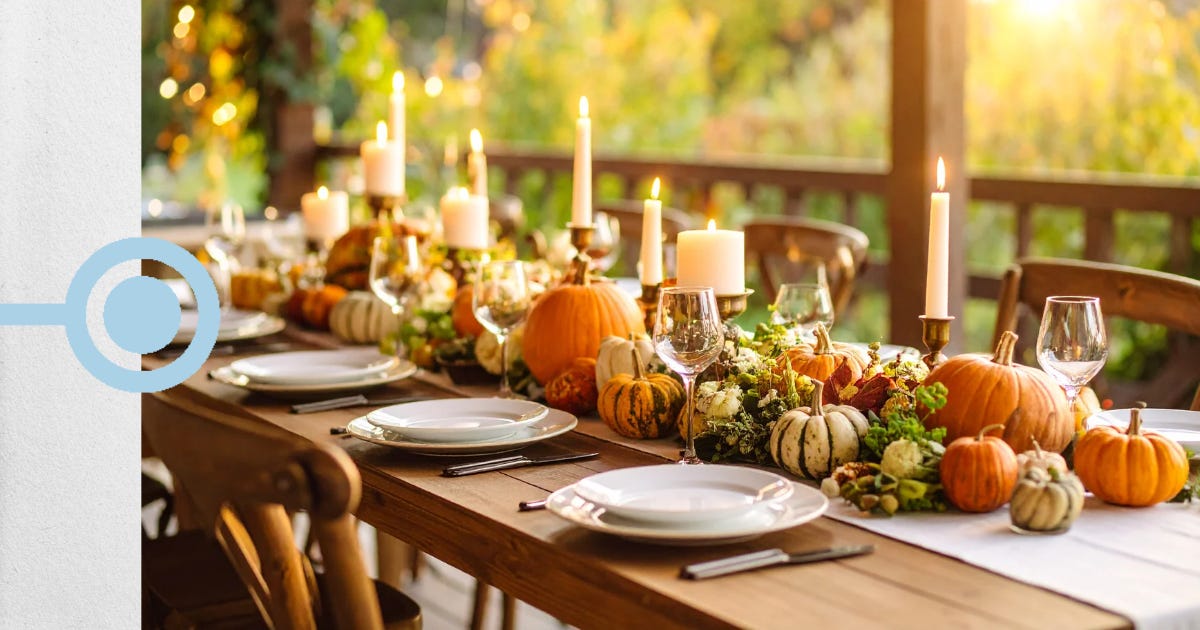
Some of our earliest lessons in civic life happen around the table.
Every table is a small community, shaped by the people we invite, the traditions we share, and the expectations we establish. It is where we learn to listen and be heard, encounter different perspectives, and navigate disagreements. In these ordinary exchanges, we practice habits essential to a healthy civic culture.
At a time of deep polarization, social isolation, and declining trust, shared tables deserve renewed attention as one of our first schools of self-government and an enduring place of civic connection.
As we explored in a special Thanksgiving episode of the Civic Parenting podcast, shared meals offer something increasingly rare: opportunities to slow down, be fully present, and build relationships across generations and differences. With greater intentionality about whom we welcome and how we engage, we can more fully realize their civic potential.
Belonging Begins With an Invitation
Stefanie spent much of her childhood trying to get to the grown-up table. Julie spent hers underneath it.
At seven, Stefanie was convinced she was ready to join the adult conversation at Thanksgiving. Her grandmother Nan disagreed. “You’re only seven!” To Stefanie, seven was far too old for the unruliness of the kids’ table. She appealed the decision. Again and again. Nan, after all, had treated Stefanie like a grown-up long before she earned her Thanksgiving promotion. Over silver-dollar pancakes on weekend mornings, Stefanie sat to Nan’s left at that same table, just the two of them, talking about the world and making her case.
Decades later, that table sits in Stefanie and her husband David’s dining room. Nan’s wedding portrait hangs nearby. Both bequests. Stefanie occupies her grandmother’s chair at the head of the table. David sits at the other end when the table is full and in Stefanie’s childhood seat when it’s just the two of them. Every dinner gathering begins with the table’s story, which reaches back another generation to Nan’s mother’s best friend, who left it to her.
Julie and her siblings and cousins had a different vantage point. They spent childhood holidays playing beneath their grandmother’s dining table, listening to family stories and spirited political debates unfolding overhead. By the time they were seven or eight, curiosity had also drawn them all out from underneath the table and into the grown-up conversation. They wanted to hear more, ask questions, and offer opinions of their own.
Julie’s dining table today is relatively new, but so much of what was on and around her grandmother’s table is now on and around hers: the stories, the spirited discussions, the family traditions, and the food they shared. She carries these forward with her daughters, nieces, and nephews, including the tradition of extending invitations beyond family to friends and those who might otherwise spend the holidays alone.
We inherited different things. Stefanie has the table. Julie has the traditions that surrounded hers. Both have shaped how we welcome people into our homes and how we understand the responsibilities that come with bringing people together.
Belonging begins with an invitation, but its deeper promise lies in being valued for who we are and learning to give something of ourselves in return. Around the table, children begin to experience this reciprocity. They help prepare meals, welcome guests, and contribute to conversations. Even serving a meal family-style creates a natural rhythm of attention and generosity. Someone offers a dish, another holds it steady, a child waits while others are served. No one needs to announce that they’re practicing citizenship. But they are.
The Power of a One-Table Conversation
At Stefanie and David’s home, dinner gatherings often feature what they call a “one-table conversation.”
You know how some dinner parties go. People settle in, and soon four conversations are underway. Half the table is talking politics, someone is describing a vacation, and the people at the far end are discussing grandchildren. Occasionally, someone gets stranded between conversations they can’t quite hear and checks their phone. Meanwhile, the most interesting person at dinner might be an introvert sitting six chairs away.

So Stefanie and David bring everyone into one conversation. Sometimes it begins with a book or a question. At one gathering, guests discussed what they were doing to be a force for good in the world. Answers ranged from raising families and tending gardens to building organizations and bridging political differences. Acquaintances and strangers discovered surprising things about one another. Some are still in touch.
The host’s job is part conductor, part storyteller: drawing quieter people in, managing enthusiastic talkers, and knowing when to follow an unexpected turn. Hosting, in this sense, is a form of civic leadership. By establishing shared expectations, encouraging participation, and modeling curiosity and respect, a good host cultivates a sense of common purpose without prescribing the course of the conversation. Of course, not every dinner needs an agenda. Some of the best conversations begin with a funny story or a disagreement nobody saw coming.
For children, these experiences are especially formative. A child answering the same question as a grandparent learns that their voice matters. Hearing a family member recount childhood experiences makes history tangible, connecting family memory to the broader human story. Younger voices, in turn, offer perspectives older generations might otherwise miss. At the heart of both intergenerational learning and democratic participation is the recognition that everyone has something to contribute and something to learn.
Disagreement Belongs at the Table Too
During the holidays, a familiar question often arises: Should families avoid politics at Thanksgiving?
We understand the impulse. Nobody wants an argument that starts with an election and ends with someone storming out before dessert. Yet avoiding every difficult subject comes at a cost. Both of us have strong convictions and enduring relationships with people whose views differ substantially from our own. Those differences enrich our relationships, expand our understanding, and challenge our assumptions.
At Julie’s table, politics and spirited debate are welcome, provided disagreements remain respectful and never become personal. She leads with curiosity, asking people how they arrived at their views. A strong argument, sincerely made, can sharpen our thinking even when it leaves us unconvinced.
Family gatherings have an enormous advantage over most civil dialogue programs: At their best, love and belonging are the starting points. And, of course, we usually have to see these people again. You can have a spectacular disagreement with your uncle and find yourself sitting beside him at the next holiday meal. You can disagree passionately about the future of the country and still take great joy in being part of each other’s lives. The strength of our convictions need not come at the expense of the strength of our bonds. Imagine how different our civic life might be if we extended even a measure of that same generosity of spirit to our fellow citizens, recognizing that, however deeply we disagree, we still have a stake in one another’s lives and a shared future to build.
Children absorb these lessons by watching the people they love. When they see adults challenge one another’s ideas, acknowledge a good argument, and share a hearty laugh after a spirited debate, they learn that they can speak their minds without risking their place at the table. They learn to hold convictions with passion and humility, and to respect the dignity of those who see the world differently. This is an education in pluralism.
When the Table Helps Heal Fractures
Living together across differences also means finding our way back to one another when relationships fracture. In our personal lives, as in our political lives, the prospect of a shared future can give us a powerful reason to reach across even the most painful divides. And that act of reaching out can begin with something as simple as an invitation to the table.
At Stefanie and David’s first Thanksgiving after marrying, they faced a familiar dilemma for blended families: Where would the children spend the holiday? Stefanie remembered childhood holidays marked by divorce, tense negotiations, and dread. Why put another generation through that? What if they invited David’s former wife?
The family liked the idea in principle, but nobody was quite sure how it would go. When the doorbell rang at David’s parents’ house, Stefanie answered. Everyone held their breath. The two women hugged in the entryway. Everyone exhaled. Then everyone hugged. The women sat beside each other at the table, and everyone joined a single conversation. That Thanksgiving began a warm family relationship that has endured for nearly 20 years, through weddings, grandchildren, funerals, and pandemic Zooms.
Julie knows what it means to be the beneficiary of such a choice. Her parents divorced more than 30 years ago. Yet in all that time, she and her siblings have never had to choose which parent to spend the holidays with. They have always celebrated together. Thanks to the choices her parents made, family holidays remain among Julie’s most cherished childhood memories and greatest joys as an adult. It is part of why she loves to host and why, over the years, she has extended invitations to her own table to help others mend fractured relationships. Having experienced the healing power of the table as a child, she seeks to extend that gift to others.
What is true in our families can also be true in our civic life. When we consider the future our children will share, we may find reasons to repair relationships we thought were beyond repair. An invitation is a small beginning, but it creates the possibility of another conversation.
Bringing the Civic Table Home
None of this requires elaborate entertaining or a perfectly executed holiday gathering. Pizza nights work, too. It begins with intentional choices. Here are a few practices we hope families will consider:
Make room. Invite someone who might otherwise be missing: a neighbor, a friend far from family, or someone whose experiences or perspectives differ from your own. Bring generations together and let children help welcome guests.
Serve one another. Prepare, set, serve, and clear the table together. Pass food, notice what others need, and give everyone a role in caring for the people gathered.
Start one good conversation. Try a one-table conversation. Ask what Thanksgiving was like when someone was young, what surprised them this year, or what they’ve changed their mind about. Listen to the answers.
Make participation playful. Use conversation cards, pass around a special object, or introduce a sand timer to encourage everyone, especially younger children and quieter guests, to contribute.
Welcome curiosity and disagreement. Model questions like “How did you come to believe that?” or “Can you tell me more?” Encourage spirited exchanges, acknowledge good arguments, and show that affection and respect can endure even when opinions differ.
Embrace the unexpected. Be intentional about bringing people together without being too prescriptive about what unfolds. Children will become restless, conversations will wander, and family dynamics may complicate our plans. Some of the most meaningful moments emerge when we allow a gathering to take on a life of its own.
Keep gathering. Thanksgiving comes once a year, but relationships deepen through repetition. Weeknight dinners, Saturday breakfasts, or regular meals with neighbors can become beloved traditions and enduring civic practices.
To help families get started, we’ve created a free, downloadable resource, A Seat at the Civic Table: Conversation Starters for Curious Families, with prompts for storytelling, curiosity, and intergenerational conversation.
This Thanksgiving and throughout the year, we have an opportunity to make our tables places where a more generous, connected, and resilient civic culture takes shape. The children gathered around them today will be the hosts of tomorrow. Much of what they bring to their own tables, and to our common life as Americans, will have been learned at ours.
Stefanie Sanford is Chair of the Board of the Institute for Citizens and Scholars and a Senior Advisor to the National Constitution Center