


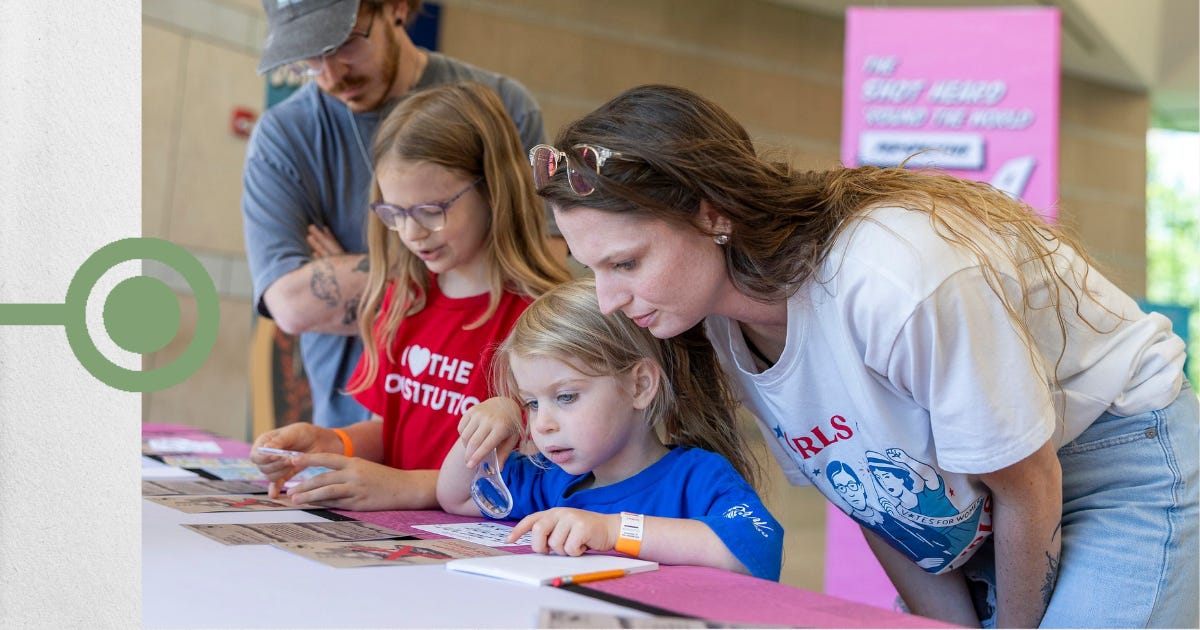
When we talk about civic education, we usually talk about young people.
What should students know about the Constitution? How should schools teach American history? How can we prepare the next generation for citizenship?
These are essential questions. But they start from an assumption worth reconsidering: that civic learning is primarily something older generations provide to younger ones.
What if, instead, we thought of civic learning as something generations do together, rooted in relationships, animated by curiosity and joy, and designed to continue across a lifetime?
Long before children encounter civics in a classroom, they are developing ideas about fairness, responsibility, community, freedom, and belonging alongside the adults in their lives. They hear family stories. They watch how adults respond to disagreement. They ask questions about the world around them. They visit museums, libraries, historic sites, parks, and places of worship.
These experiences may not look like traditional civic education. But they are part of how we learn what it means to live in a community and participate in a self-governing society.
And they point toward an opportunity we have only begun to meaningfully explore as a field.
What Generations Can Learn From One Another
We know that families matter to civic learning. Research has found connections between conversations at home and young people’s civic knowledge and engagement. Parents and other adults model habits of participation and help shape how young people understand public life.
But learning inside families doesn’t travel in only one direction. Children bring home questions and ideas of their own. Research has documented this exchange, including evidence that young people can influence their parents’ civic behavior. One study found that parents became more likely to vote when a child living at home became newly eligible to vote.
That shouldn’t be surprising. Learning across generations is powerful precisely because each generation brings something the others cannot. A grandparent brings memory and lived experience. A parent brings context. A child brings curiosity and questions that adults may have stopped asking. Put those perspectives in conversation and something different happens: history becomes personal, familiar stories can be seen anew, and a question asked by one generation can spark discovery in another. The learning happens in the exchange.
That is what makes intergenerational civic learning so promising. The adult does not always have to be the teacher, or the child the student. Each can deepen the other’s understanding.
Joy Belongs in Civic Learning
There is another part of this that I think we often underestimate: joy.
Civics is serious. Constitutional democracy asks us to wrestle with difficult questions about power, rights, liberty, equality, responsibility, and citizenship. Good civic education should never shy away from that complexity. But serious learning does not have to feel solemn.
Think about how families naturally learn together. They tell stories. Play games. Explore new places. Ask questions. Solve problems. Debate answers. Laugh. Compete. Discover. These aren’t distractions from learning. They are invitations into it.
Research on learning through play points to the value of experiences that are active, engaging, meaningful, socially interactive, iterative, and joyful. Research in museums and other informal learning environments similarly shows how shared experiences can prompt questions, explanations, and exploration between children and adults.
Joy doesn’t mean making civics easy or merely entertaining. It means creating the conditions for curiosity. A joyful encounter with history can prompt another question. That question can lead to a book, a museum visit, a conversation with a grandparent, or deeper exploration in school.
The goal isn’t simply to make someone enjoy a civic activity. It is to create the civic spark that makes them want to know and explore more.
Testing the Idea
At the National Constitution Center, we’ve become increasingly interested in understanding what joyful, intergenerational civic learning can look like and how it can deepen learning for children and adults.
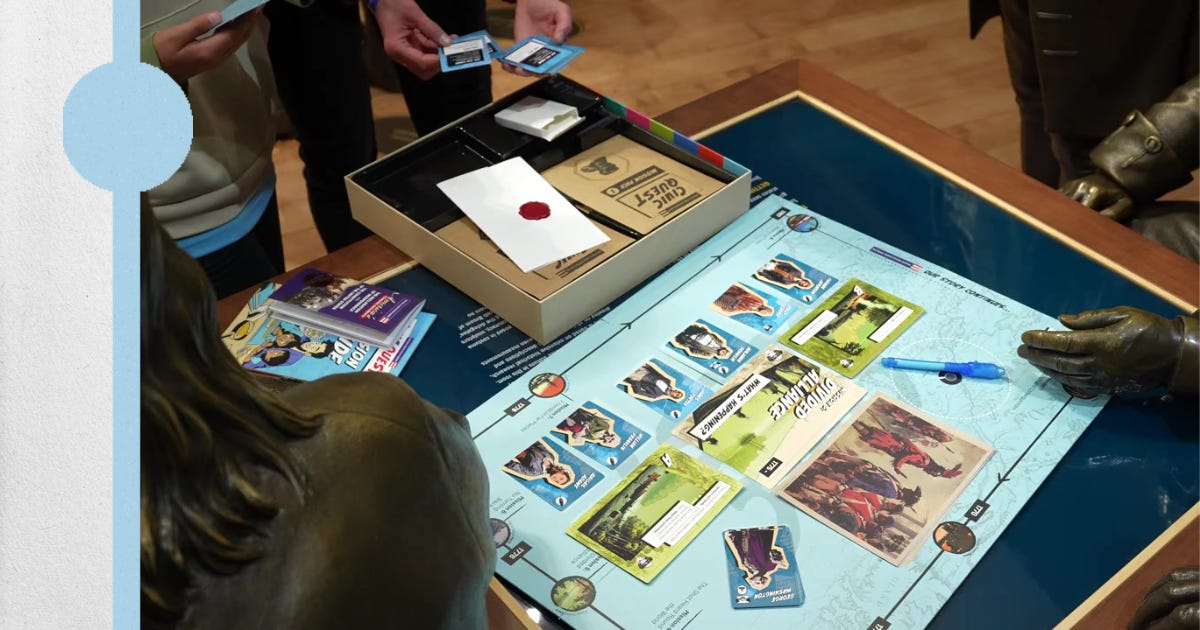
That’s why this past year we launched Civic Quest, a play-based family learning experience for children ages 7–12 and the adults in their lives. Through hands-on missions of discovery, families decode clues, encounter historical characters with different points of view, and explore the people and ideas that shaped the nation. Along the way, they practice civic skills such as listening to different perspectives, asking questions, and working together to solve problems.
Thanks to philanthropic support, we committed to making the first 20,000 Civic Quest sets free to families nationwide. The first 10,000 are already in families’ hands, and demand has been so strong that another 10,000 are now being produced for families on our waitlists. The incredible response has also encouraged us to begin developing the next Civic Quest box, extending the experience into another chapter of America’s constitutional story.
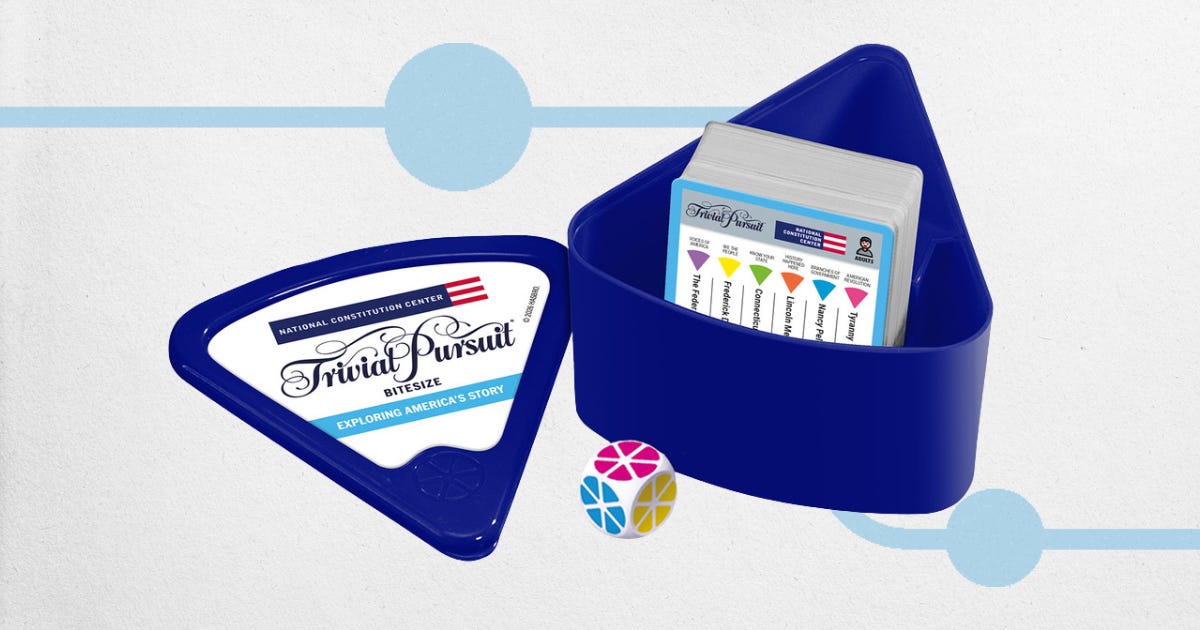
We also launched Trivial Pursuit: Exploring America’s Story, a special edition of the classic game designed intentionally for generations to play together. Its 600 questions are divided evenly between kids and adults and span six categories, from the American Revolution and branches of government to voices from history and the places where history happened. It’s a simple design choice with an important effect: everyone at the table has something to contribute, and everyone has something to learn.
The games are different, but the hypothesis behind them is the same: civic learning can be rigorous and substantive while also being playful, social, and shared.
Early enthusiasm is encouraging. But participation and enjoyment aren’t the same as learning. That’s why we’re working with Dr. Ashley Berner and the Johns Hopkins University Institute for Education Policy on a nine-month study of Civic Quest examining its effects on children and parents and caregivers. We want to know what happens when families learn this way: What do they learn and remember? Does play generate meaningful conversation? Do children and adults learn from one another? Does the experience spark curiosity that continues after the game ends?
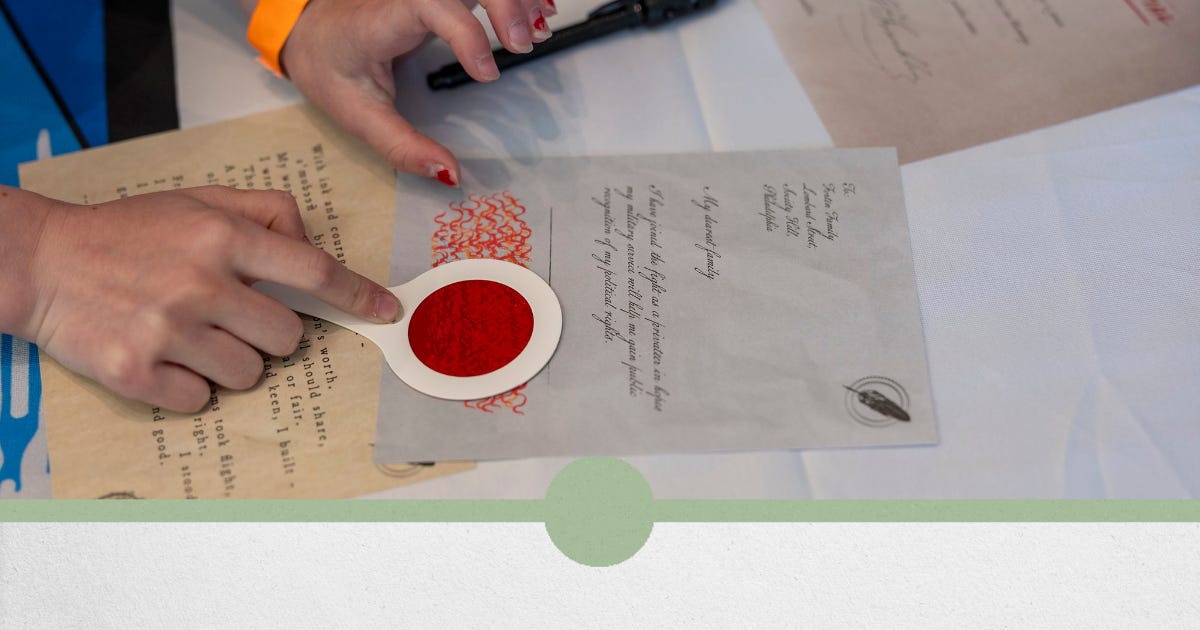
Civic Quest is one case study. During the Civic Decade, the Center is committed to helping build a stronger evidence base for intergenerational civic learning and putting what we learn into practice. We want to develop and test experiences that are rigorous, joyful, and designed to endure, creating opportunities for children and adults to learn with and from one another in homes and communities across the country.
The Civic Decade gives us an opportunity to make this kind of learning a lasting part of our civic culture. If we want civic learning to endure from one generation to the next, we need to create more opportunities for generations to learn alongside and from one another.
Cited Research
Family conversation and civic development: Hugh McIntosh, Daniel Hart, and James Youniss, “The Influence of Family Political Discussion on Youth Civic Development: Which Parent Qualities Matter?” PS: Political Science & Politics 40, no. 3 (2007).
Young people influencing parents: Jens Olav Dahlgaard, “Trickle-Up Political Socialization: The Causal Effect on Turnout of Parenting a Newly Enfranchised Voter” American Political Science Review 112, no. 3 (2018).
Joy and playful learning: Kathy Hirsh-Pasek and colleagues, “Making Schools Work: An Equation for Active Playful Learning” Theory Into Practice (2023).
Families learning together: Maureen Callanan and colleagues, “Exploration, Explanation, and Parent–Child Interaction in Museums” Monographs of the Society for Research in Child Development 85, no. 1 (2020)