


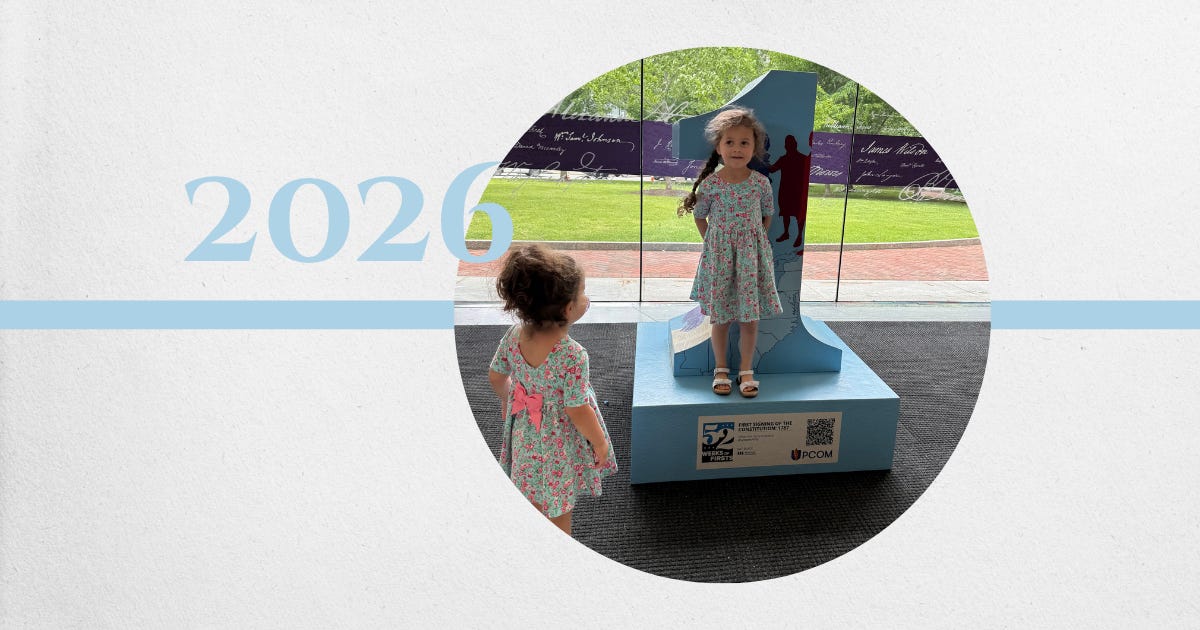
This fall, millions of children will walk into classrooms carrying new backpacks, sharpened pencils, and all the nervous excitement of a new school year.
One of them will be my daughter Sophie.
She starts kindergarten in a few days, just weeks after celebrating America’s 250th birthday and her own fifth birthday. On July 4, Sophie and her younger sister, Charlotte, joined me and my husband at the National Constitution Center for the 250th anniversary of the Declaration of Independence. Amid the crowds and celebration, they were beginning to encounter the American story for themselves.
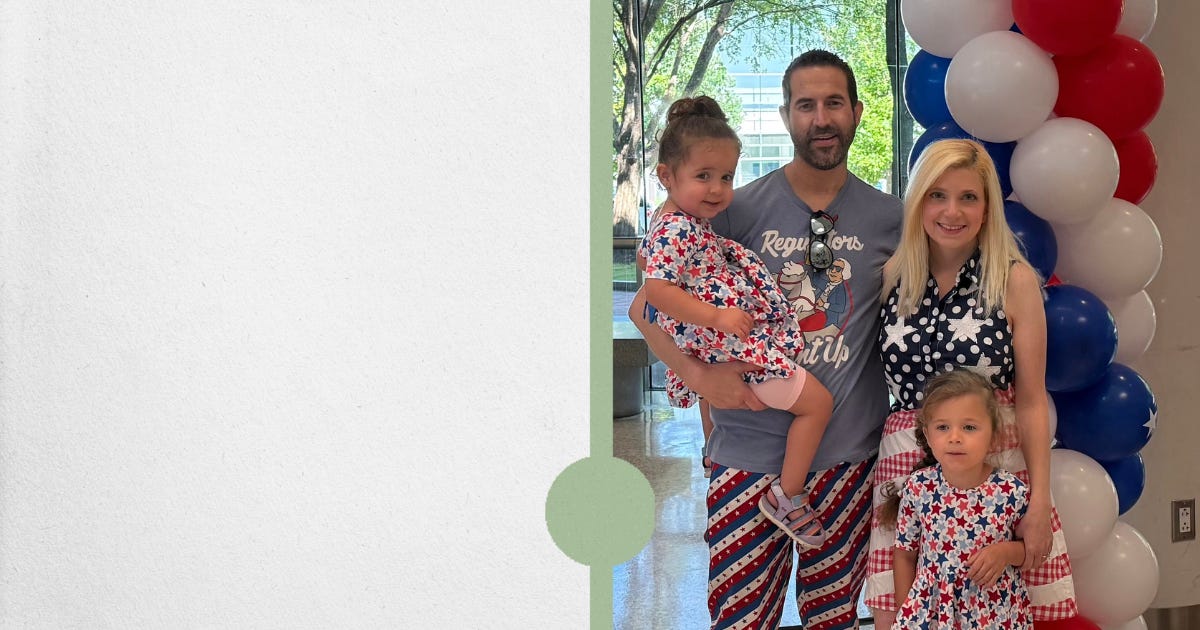
For Sophie, it was one of her earliest experiences with American history. For me, as both her mother and someone who spends every day thinking about the future of civic learning, it was impossible not to think about what comes next.
Sophie is beginning formal schooling at an extraordinary moment.
The 250th anniversary of the Declaration is not a culmination. It is the beginning of a much longer sequence of anniversaries and, with them, an extraordinary opportunity for civic learning. In 2037, when the nation marks the 250th anniversary of the Constitution, Sophie will be in high school, and Charlotte will be in middle school. In 2041, when we commemorate the 250th anniversary of the Bill of Rights, Sophie will be a young adult, and her little sister will be turning 18.
Those dates can feel distant on a calendar. As a mother, they suddenly do not feel distant at all.
In a very real sense, the Civic Decade will span my daughters’ childhoods. It will carry them from some of their earliest encounters with the American story through the years when they begin to ask harder questions, form their own views, and discover more fully what it means to participate in and help shape our constitutional democracy.
That makes me think differently about what these next 15 years can be.
At the National Constitution Center, we have been talking about the Civic Decade as the generational opportunity stretching from America’s 250th through the 250th anniversaries of the Constitution and Bill of Rights. These anniversaries give us moments of national attention. But anniversaries alone do not produce civic knowledge, strengthen civic institutions, or create habits of citizenship.
We have to decide what to do with them. And one way to think about that work is through the children beginning their education in this anniversary year.
What if we treated this fall not simply as the beginning of another school year, but as the first day of a 15-year civic learning journey?
Imagine what we could build if we began with the expectation that a child entering school in 2026 should have repeated opportunities, across childhood and adolescence, to encounter the ideas, history, institutions, and debates that shape our constitutional democracy.
Not a single civics course in eighth grade. Not a unit on the Constitution in high school. Not a worksheet on Constitution Day once a year. A lifelong learning journey.
At five, that might begin with stories: Who were the people who came before us? Why did they decide to declare independence? What did they mean when they wrote that all people are created equal? What promises did America make, and where have we fallen short?
As children grow, the questions can grow with them. Why did Americans decide they needed a Constitution? Why divide power among different branches and levels of government? Why protect speech, religion, assembly, and petition? How has the meaning of equality changed over time? What happens when constitutional principles collide? How have generations of Americans debated those questions, and how do we continue those discussions today?
By adolescence, students should not simply know that these debates exist. They should have the knowledge and confidence to enter them: to read primary sources, weigh evidence, understand competing constitutional arguments, listen seriously to people who see a question differently, and develop views of their own.
And learning need not happen only in school.
Children learn from parents and grandparents, museums and libraries, historic sites and community institutions. They learn through books and podcasts and digital experiences. They learn by visiting places where history happened, asking questions around a dinner table, hearing family stories, and discovering that the debates of the past are connected to questions unfolding around them today.
That is why the Civic Decade should be an invitation to think about civic learning across a lifetime, beginning early, deepening over time, and happening everywhere learning happens.
So what should we do with these 15 years?
We should build connected pathways for civic learning, so that what a child encounters at five can be revisited with greater depth at 10, 15, and 18. We should invest deeply in teachers, pairing rigorous, nonpartisan resources with sustained professional learning that strengthens their own knowledge and practice. We should create more opportunities for families to learn across generations, and connect schools more intentionally with museums, libraries, historic sites, and other civic institutions. And we should use technology responsibly to make the best civic learning accessible to anyone, anywhere, while creating clearer pathways for lifelong learning. But that must be matched by a human strategy that gives young people more opportunities to learn with others, build relationships across differences, and participate meaningfully in the civic life around them.
Just as importantly, we should spend these 15 years building a much stronger evidence base for civic learning. We should measure not simply how many people participate, but what they know and retain, whether they become more curious and confident learners, whether they can engage seriously with different perspectives, and whether their curiosity leads them to seek out new opportunities to deepen their understanding. Fifteen years gives us the chance to track that growth over time, understand what produces durable impact, and use what we discover to make each opportunity more meaningful.
If we deliver that promise, Sophie and Charlotte should grow up with civic learning that builds as they do: encountering the American story first through family experiences and stories, then through increasingly sophisticated classroom learning, visits to civic institutions, conversations across generations, interactions with primary sources, constitutional debates and discussions, and opportunities to develop and test ideas of their own. By the time they reach adulthood, my hope is that they will see civics not as a subject they once took in school, but as a lifelong practice.
And if we do this well, the benefits should extend far beyond their generation. The children who begin kindergarten in 2041 should inherit better-prepared teachers, stronger civic institutions, richer and more accessible resources, connected learning pathways, and far more evidence about how civic knowledge and habits actually take root and endure.
That is what makes this 15-year horizon so powerful. We have time to accompany one generation from childhood to adulthood while building something stronger for the generations that follow.
In a few days, I will send Sophie off to kindergarten. I will be thinking, as parents do, about everything I hope she learns and the person I hope she becomes. But I will also be thinking about the responsibility those of us who work in civic learning share for her generation.
America has given us a remarkable series of anniversaries around which to organize this work. Our task is to make the years between them count, so that the generation coming of age across the Civic Decade is ready to carry the work of self-government forward and strengthen it for the generations that follow.
How can and will we, the adults, participate in this Civic decade? What will we read and listen to, and learn that will shape a better understanding of the world and a future we can and are building. Can’t wait!
💯 Excellent!