


Every generation inherits the responsibilities of self-government. Every generation must also acquire the knowledge to sustain it.
The nation’s founders understood this well. James Madison wrote, “… a people who mean to be their own governors must arm themselves with the power which knowledge gives.” Thomas Jefferson believed that education was essential to the preservation of liberty. John Adams argued that republican government ultimately rested on the knowledge and character of the people themselves.
A free people must be an informed people. That is not simply an aspiration. It is one of the essential conditions of constitutional self-government.
But recognizing the importance of civic knowledge has never been the same as ensuring that people have the means to acquire it.
Every generation must ask not only what citizens should know, but how a free society creates opportunities for people to deepen their understanding of the Constitution, their communities, and the responsibilities of citizenship over the course of a lifetime.
Today, research on learning has deepened our understanding of how that journey unfolds. Learning is not confined to childhood or the classroom. It is a lifelong process of curiosity, discovery, reflection, and growth. We revisit important ideas with new experiences, new questions, and new perspectives. Knowledge accumulates. Judgment matures. Wisdom deepens.
Citizenship follows that same path.
It begins with a spark.
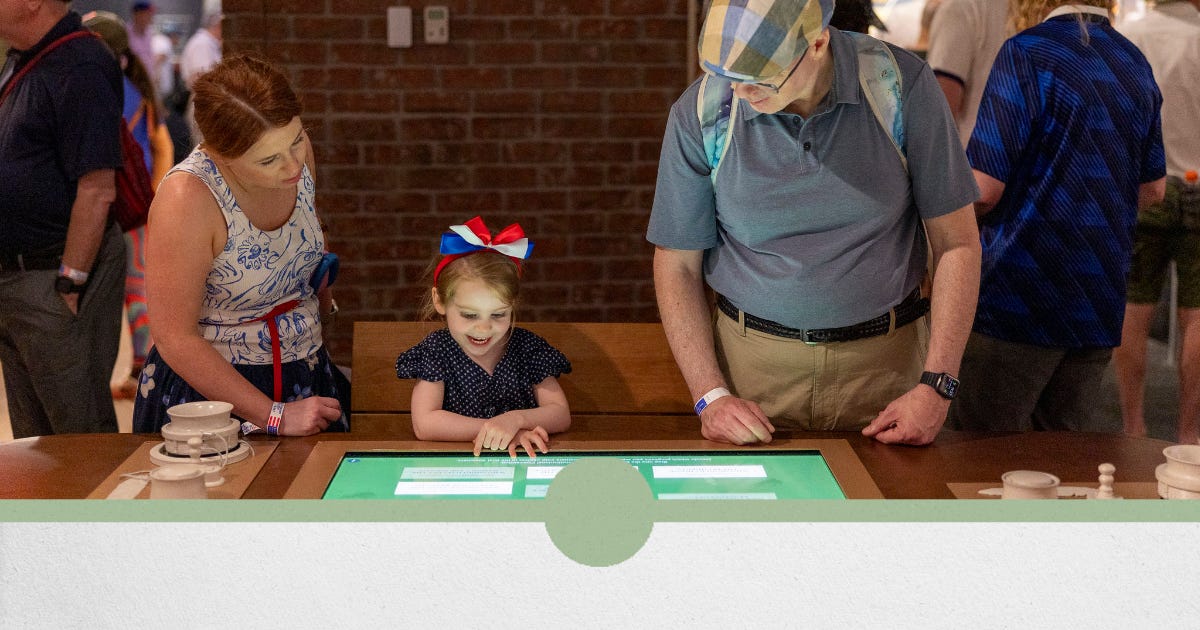
A child asks why rules matter. A family gathers with neighbors for a Fourth of July parade. A teacher introduces the Declaration of Independence. A visit to a museum or historic site brings history to life. A librarian recommends a book about a historical figure or event. A podcast sparks a conversation during a morning commute. A public program inspires someone to pick up a pocket Constitution they have not opened in years.
These moments may seem ordinary. Yet each has the power to awaken curiosity, invite exploration, and begin a lifelong constitutional learning journey.
But the spark is only the beginning.
A lifelong civic learning journey is not a straight path. It unfolds across a lifetime, shaped by age, experience, and the questions we encounter along the way. The questions we ask at age 6 are different from the questions we ask at 16, 36, or 76. As our lives unfold, so does our understanding of the Constitution, our responsibilities as citizens, and one another.
Imagine what it would mean if every American had the opportunity to follow that journey.
The journey would begin in families, where children first encounter fairness, responsibility, and belonging. It would deepen in schools, where students build the constitutional knowledge and historical understanding that prepare them for citizenship. It would expand in colleges and universities, where many learners first engage in sustained inquiry, wrestle with competing ideas, and develop habits of intellectual curiosity that can last a lifetime. It would continue through museums, libraries, historic sites, bookstores, community organizations, podcasts, public dialogue, and digital learning experiences that invite people to return to constitutional questions throughout their lives. Civic learning would no longer be something we associate primarily with childhood or formal education. It would become a lifelong habit of curiosity, exploration, and constitutional reflection.
This is one of the great opportunities of the Civic Decade.
For too long, we have relied on schools and classroom educators to shoulder the primary responsibility for civic formation. Yet we have not invested in civic education as fully as we should, nor have we built the broader network of institutions and experiences that support lifelong civic learning.
The answer is not to ask less of schools. It is to ask more of all of us.
We should strengthen civic education in schools so every young person develops a strong constitutional foundation. We should make civic parenting the norm rather than the exception, giving families the tools, confidence, and opportunities to explore our constitutional story together. We should encourage colleges and universities to embrace civic learning not as a single course or graduation requirement, but as a central part of preparing students for lives of informed citizenship and constitutional self-government. We should reinvest in the museums, libraries, historic sites, bookstores, and community organizations that make civic learning possible in communities large and small. And we should create many more opportunities for adults to continue learning through public programs, exhibitions, podcasts, digital experiences, civil dialogue, and university-quality courses throughout their lives.
No single institution can cultivate an informed citizenry. Nor should it.
A constitutional democracy depends on a constellation of institutions that accompany us throughout our lives, each inviting us back into our shared constitutional story with new questions, new experiences, and new opportunities to learn.
The anniversaries before us should inspire renewed investment in the institutions, partnerships, and places where civic learning happens over the course of a lifetime. They should encourage us to build the civic learning infrastructure that a constitutional democracy requires, ensuring that every American, regardless of age or background, has meaningful opportunities to explore the Constitution, wrestle with constitutional questions, engage in civil dialogue, and continue growing as a citizen.
At the National Constitution Center, we hope to help lead that broader effort. Our role is to invite learners of every age into America’s constitutional story, to spark curiosity, deepen understanding, and create opportunities for sustained lifelong constitutional learning. Not because one institution can build a culture of lifelong civic learning on its own, but because every institution has an important role to play.
The founders remind us that a free people must be an informed people.
The Civic Decade invites us to ensure that every generation has the opportunity to become one.